Introduction
Artificial Intelligence is transforming the way businesses operate. From generating emails and analysing customer data to automating workflows and supporting decision-making, AI is becoming part of everyday business operations.
However, as AI adoption accelerates, businesses are facing a new challenge:
How do you ensure AI remains accurate, secure, and aligned with your business policies?
Without proper governance, AI can create inconsistent outputs, expose sensitive information, or make decisions that don’t reflect your company’s standards.
The focus is no longer just on implementing AI—it’s about governing it effectively.
Common Business Problems
1. AI Generates Inconsistent Responses
Different employees ask AI the same question and receive different answers.
Impact
- Inconsistent customer communication
- Conflicting internal decisions
- Reduced trust in AI
Solution
Create standardized AI workflows with clearly defined business rules and approved knowledge sources.
2. Sensitive Business Data Is Shared With Public AI Tools
Employees copy customer details, financial information, or internal documents into public AI platforms without understanding the risks.
Impact
- Data privacy concerns
- Compliance risks
- Loss of confidential information
Solution
Use secure, business-controlled AI platforms with role-based access and governance policies.
3. Business Knowledge Is Scattered Across Teams
Policies, SOPs, and operational knowledge exist in emails, documents, and employees’ personal folders.
Impact
AI cannot provide reliable answers because the information is fragmented.
Solution
Centralize business knowledge and connect AI to approved company data.
4. Management Has No Visibility Into AI Usage
Business owners often don’t know:
- Who is using AI?
- What tasks are being automated?
- What information AI is accessing?
Impact
- No accountability
- No monitoring
- Difficulty measuring AI effectiveness
Solution
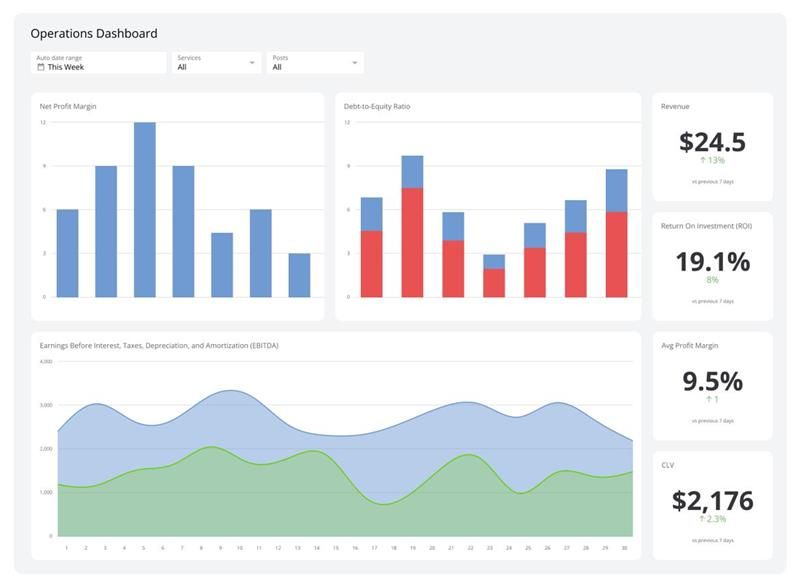
Monitor AI activity through centralized dashboards and reporting.
5. AI Automates Processes Without Human Oversight
Automated workflows may trigger actions based on incomplete or incorrect information.
Impact
- Operational errors
- Customer dissatisfaction
- Poor business decisions
Solution
Introduce approval workflows and human review for critical business decisions.
The Solution: AI with Governance
Businesses should view AI as an intelligent assistant—not an independent decision-maker.
The right approach combines automation with governance, ensuring AI operates within defined business policies, compliance requirements, and organizational standards.
Zoho Products That Help
Zoho Zia
Zoho Zia brings AI capabilities across the Zoho ecosystem, helping businesses work smarter while maintaining control.
Key Features
- Intelligent recommendations
- Predictive analytics
- Email and meeting summaries
- Data insights
- Workflow suggestions
- AI-powered search
Zoho CRM
Zoho CRM ensures customer information remains structured, centralized, and secure while enabling AI-assisted sales, customer engagement, and forecasting.
Zoho Analytics
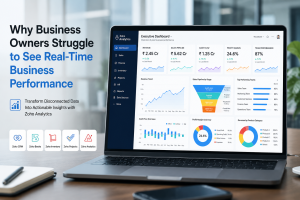
Zoho Analytics provides management dashboards to monitor business performance, trends, and AI-generated insights for better decision-making.
Zoho Creator
Zoho Creator enables businesses to build customized AI-assisted workflows with approval processes, validations, and business-specific logic.
Zoho WorkDrive
Zoho WorkDrive acts as a centralized knowledge repository where policies, SOPs, and documents can be securely managed and accessed.
Real Business Examples
Example 1: Customer Support
Before
Support agents relied on different AI tools, resulting in inconsistent customer responses.
After
The business centralized its knowledge base and integrated AI into approved customer support workflows.
Result
- Consistent communication
- Faster response times
- Improved customer satisfaction
Example 2: Sales Team Productivity
Before
Sales representatives manually created meeting notes, follow-up emails, and sales summaries.
After
AI generated summaries and drafted communications while managers reviewed outputs before sending.
Result
- Increased productivity
- Better consistency
- Reduced administrative effort
- Business Results Organizations Typically Experience
Operational Benefits
- Reduced manual effort
- Faster decision-making
- Standardized business processes
- Increased productivity
Management Benefits
- Greater visibility into AI usage
- Better governance
- Improved compliance
- Better operational control
Employee Benefits
- Faster access to business information
- Increased efficiency
- Reduced repetitive tasks
- Improved collaboration
Industries That Benefit the Most
- Financial Services
- Healthcare
- Professional Services
- Manufacturing
- Retail & Distribution
Recommended Zoho Products
- Zoho Zia
- Zoho CRM
- Zoho Analytics
- Zoho Creator
- Zoho WorkDrive
- Zoho Flow
Warning Signs Your Business Needs AI Governance
- Employees use different AI tools without standard guidelines.
- Sensitive business information is shared with public AI platforms.
- AI-generated responses vary across teams.
- There is no visibility into how AI is being used.
- Critical decisions rely entirely on AI without human validation.
Conclusion
The future of AI in business isn’t just about automation—it’s about responsible automation.
Organizations that combine AI with governance will improve productivity, protect business data, maintain compliance, and build greater trust with both customers and employees.
By implementing AI responsibly through the Zoho ecosystem, businesses can innovate with confidence while maintaining complete operational control.
About Dotsquares
At Dotsquares, we help businesses adopt AI securely and strategically using Zoho’s ecosystem. By combining Zoho Zia, Zoho CRM, Zoho Analytics, Zoho Creator, Zoho WorkDrive, and Zoho Flow, we build intelligent business solutions that improve efficiency, automate complex processes, and keep organizations in control as they scale with AI.